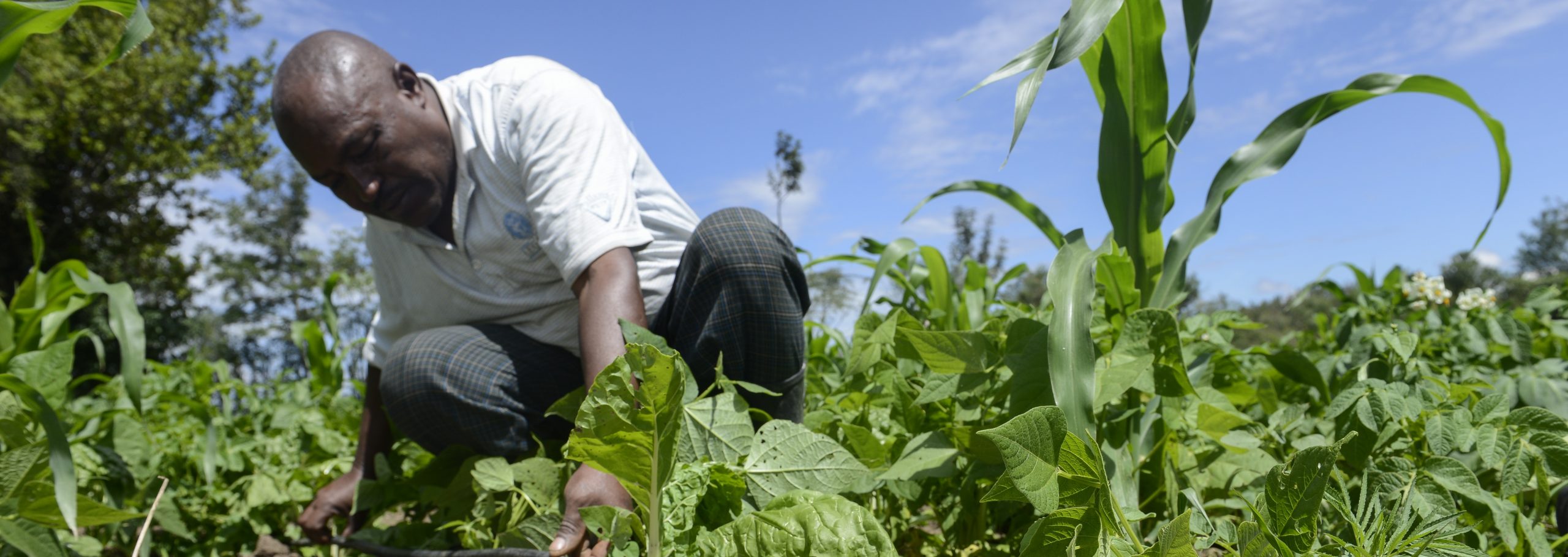
The West Africa region offers potential to support sustainable water and energy-efficient innovations and approaches in agri-business. It benefits from a young and dynamic population eager to showcase its entrepreneurial innovation capacity. In a regional context often marked by conflict and climate stress, it is even more important to harness this potential to ensure food security, job creation and climate adaptation. Action must be taken now as climate change is threatening to exacerbate issues. The region has been identified by the IPCC as one of the most vulnerable to climate change. Extreme weather events are expected to increase, as well as a rise in temperature, uncertain precipitation trends, heavy rains, extreme droughts, deforestation, soil and coastal erosion, or sea level rise. These will have dramatic impacts on ecosystems, water resources, agriculture, but also on infrastructures and human health if effective measures are delayed.
West Africa
Regional Innovation Hub
Context
Additionally, West Africa´s population is expected to increase by nearly 90% by 2100, which will further increase the need for food and put additional pressure on natural resources.
75% of ECOWAS’ exports are fuels coming from extractive industries, while cocoa and food preparations account for 5% of its exports. Ivory Coast, where WE4F is based, is the world’s largest producer and exporter of cocoa beans with 40% of the world production. The West African region has a great potential for sustainable energy innovations: wind energy in coastal areas (Cape Verde, Senegal, Gambia, and also Mali, Nigeria and Ghana), small-scale hydropower in the South (Ivory Coast, Ghana, Guinea, Guinea-Bissau, Liberia, Togo, Sierra Leone), solar energy in the North (Niger, Burkina Faso, northern parts of Ghana and Nigeria) and biomass resources are well distributed across the region.
Energy and water are at the centre of sustainable development. There is a need for climate-friendly, water- and energy-efficient technologies that enable innovation to produce more with less. West Africa therefore seeks to strengthen its resilience and adaptive capacity in the agriculture water and energy sectors. The private sector is a key player in these developments, in particular local small and medium-sized enterprises (SMEs) that develop and distribute innovations tailored to local needs. WE4F will support these SMEs to offer them the opportunity to scale up their businesses and develop their entrepreneurial capacity while having a positive impact on local communities by increasing a sustainable food security.
Objectives
- Supporting the distribution of innovations (solar technologies, apps, e-mobility, energy efficiency etc.)
- Strengthening entrepreneurial capacities
- Informing end users and multipliers about innovations
- Improving accessing to financing for innovators and end-users
- Improving political conditions for innovations
- Accelerating the exchange of experiences on the local, regional and global level
Focus Activities
In order to achieve its objectives, the PEEPA/WE4F project implements various activities, such as funding companies in agribusiness through PPPs to help them switch to green energy and a more efficient use of energy and water, supporting innovators through grants and technical advice; setting up demonstration projects with enterprises, universities, NGOs, etc.; collecting and disseminating the results of demonstration projects; and developing and implementing exchange formats to adapt framework conditions.
Private Sector Support
We empower selected innovators in West Africa by strengthening their management and business skills through trainings and therefore supporting them in upscaling their innovations. Further, we support additional companies through public-private partnerships in adopting more sustainable processes. To facilitate access to innovations, we improve suitable financing options for both companies and end users by developing new financial instruments and training financial actors.
Capacity Development & Pilot Projects
We organise trainings in West Africa for end users and multipliers in different aspects of resource-efficient agriculture and food processing. We also set up pilot projects and demonstration sites to showcase technological innovations.
Enabling Environment
In order to ensure an enabling environment for innovative solutions to upscale, we work on improving political and sectorial conditions by consulting policy-making processes. Further, we strengthen regional and global exchange on the interlinkages of water, energy and food by sharing lessons learned and organizing events.
The Team in West Africa
The West Africa Hub, based in Abidjan (Ivory Coast), has as its main mission to disseminate climate-friendly, water and/or energy-efficient innovations on a large scale in West Africa, including in Senegal, Mali, Ghana, Burkina Faso, Niger, Benin, Togo and Nigeria and of course Ivory Coast. These innovations will enable agro-food companies and the agricultural sector to produce more food with less water and energy while promoting renewable energies.
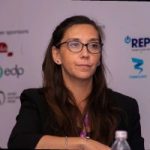
Nathalie Weisman
West Africa Hub Manager
Nathalie Weisman has been Project Manager at GIZ for over 3 years. Prior to joining GIZ, Nathalie has worked for ECREEE on activities in the ECOWAS, was a researcher 5 years in Burkina Faso on energy access conditions and biomass development potential for biofuels for and worked for the private sector in France, coordinating carbon finance projects in the field of energy, in Kenya and in West Africa. Nathalie Weisman has over 15 years’ experience working in the energy and climate sectors. She holds a BSc in International Business and Economics from Northeastern University, USA, and an MSc in Corporate social and Environmental Responsibility from Paris XII University.
Yannick Abraham Stephane Aka
Monitoring & Evaluation
Yannick holds a Master’s degree in English with a major in American Civilization at the University of Bouaké. After working as head of monitoring and evaluation and of research monitoring-evaluation in NGOs working in the health sector (Association pour la Santé et le Développement Lakota-Divo and Renaissance Santé Bouaké), he was recruited by the Investment Promotion Centre in Côte d’Ivoire as a research officer in the Business Environment Department in charge of the implementation of Business Climate Improvement Reforms for Côte d’Ivoire. Yannick is passionate about comedy, music and sport.
Gertrulde Ouattara
Receptionist
Gertrulde graduated from the University of Cocody in 2006 with a DEUG 2 in Economics and Management. Gertrulde has worked as a cashier Management Assistant at the Shalom School Group and also at KGI (Investment Company). She was also a sales assistant at the PAKO Gourmand pastry shop which has now become PAUL Vallon. She joined WE4F in November 2020.
Zie Gaston Dohfere Coulibaly
Administration & Accounting
Zie obtained a professional bachelor’s degree in financial accounting in 2014 and is currently pursuing a master’s degree in financial accounting, auditing and management in Abidjan. From 2013 to 2019, Zie held various positions within the Association de Support à l’Auto Promotion Sanitaire et Urbaine (ASAPSU) in partnership with the United Nations Refugee Agency for Tabou refugees, as purchasing manager and logistics, as a delegate for income-generating activities and as an accountant. After briefly working as a purchasing assistant at Tedis Pharma CI between May and June 2019, Zie has been working as an accountant for ASAPSU San Pedro in partnership with the UNPD since July 2019.