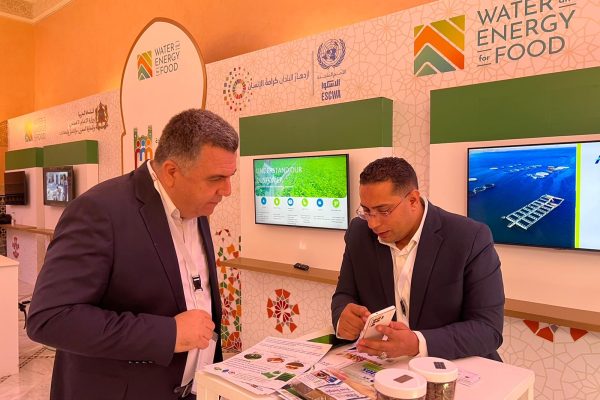
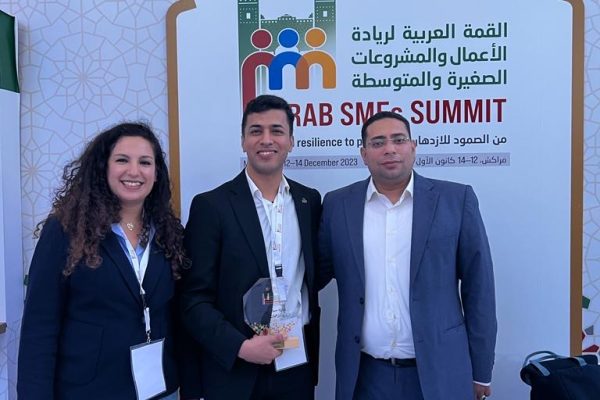
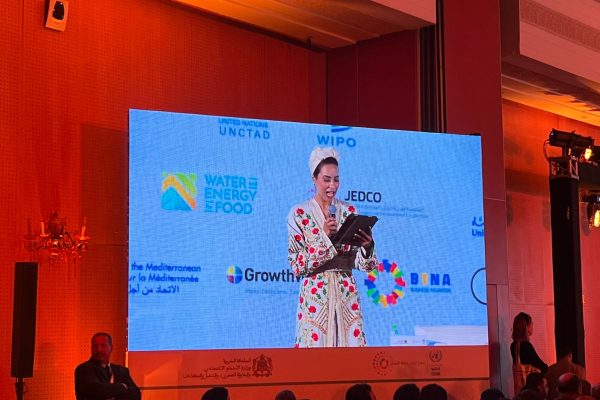
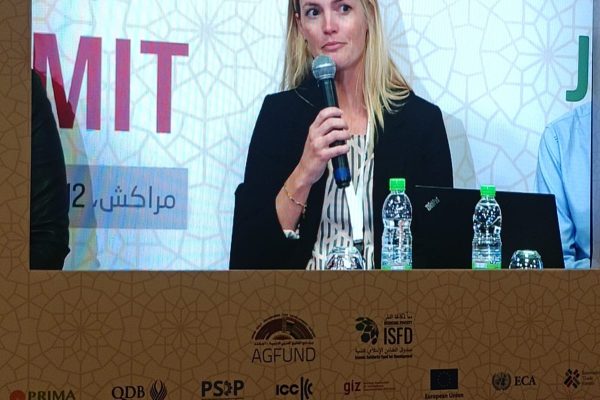
In our quest for a brighter, more sustainable, and inclusive future, the second edition of the Arab SMEs Summit, held in Marrakesh, emerged as a beacon of innovation and collaboration. At the heart of the summit lay a special track dedicated to green and sustainability solutions, perfectly aligning with the overarching theme of prosperity and resilience. Proudly representing the Water and Energy for Food (WE4F) MENA Regional Innovation Hub, our team had the honor of co-leading this transformative track, igniting a pursuit of a greener and more resilient economy across the Arab Region. As we reflect on the event, we are excited to share some of the main results and valuable lessons learned from the panels and workshops.
Pressing Challenges
Our track began by acknowledging the pressing challenges that require immediate attention. Food security, water scarcity and drought, currency fluctuations, and limited access to affordable and reliable sources of power, water, and materials, all emerged as key issues. We quickly realized that these challenges were intertwined with others faced by the climate mitigation and adaptation solution providers. Solution providers grappled with a lack of market information to build their business case, high customer acquisition costs associated with the fragmentation of their client base including agricultural lands, high initial capital costs for the adopters of such solutions, and the absence of suitable technical assistance and financial modalities to scale their operations.
Drivers for Success
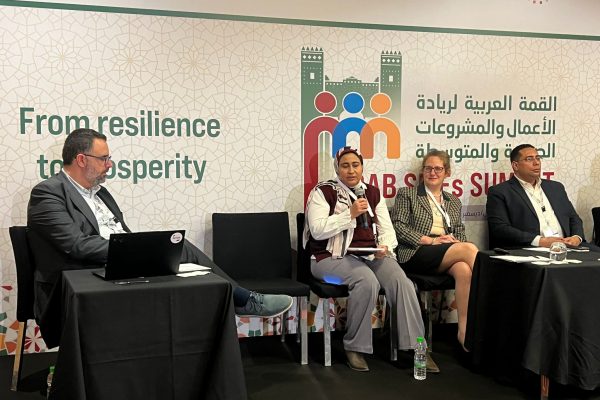
In the face of these challenges, panelists pinpointed robust market drivers that stress the necessity of embracing climate mitigation and adaptation solutions. The pursuit of curbing carbon emissions in cross-border trade and ensuring accessible and cost-effective power, water, and food security, alongside the commitment to carbon emission reduction at national, regional, and global levels, has propelled the urgency of implementing green solutions. It is further amplified by escalating consumer demand for social and environmental responsibility from governments and corporations. Actors within the climate space should listen to these demands and drivers as they present a compelling business and economic case. Implementing green solutions will help meet the growing need for cost-effective, stable streams of locally available and accessible water, energy, and material resources for agricultural and industrial development as well as sustainable livelihoods.
Technology Opportunities
In pursuit of the conference’s theme, “sustainability, prosperity, and resilience”, WE4F presented and encountered a realm of exciting technology and business opportunities: alternative agricultural inputs (e.g., compost and biofertilizers); decentralized energy and water solutions (e.g., water-efficient irrigation, solar PV pumping and on-site water treatment systems); circularity solutions to reduce food waste; digital applications to optimize water-energy-food systems and food supply chains; value-added food processing; and innovative cold chain solutions for food value chains. These technologies and its practical applications presented by the panelists not only offer hope for a more sustainable future but also demonstrate the potential for economic growth and job creation.
Business Model Innovation
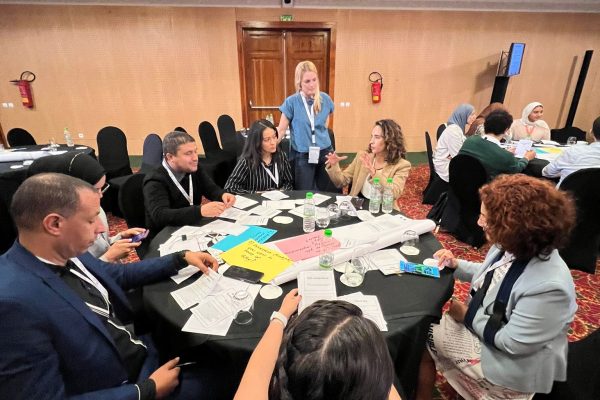
We soon realized that the heart of innovation lies not only in technology but also in business model innovation. Our Green Business Model Innovation workshop exposed attendees to over 30 types of business models, illuminating the myriad opportunities beyond the mere sale of products and services. Panels also explored innovative business models, including pay-per-use and enhanced agriculture extension services coupled with access to financing. These discussions drew from real-world examples within the WE4F program, showcasing initiatives like end-user financing in Lebanon and Morocco.
Financing
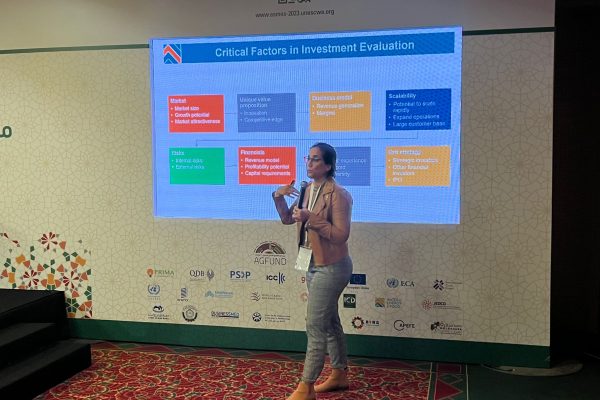
While the participating audience agreed that financing for firms and innovations was available, we recognized a crucial barrier in accessing, or realizing, such financing. There is often a gap between business model innovation and the bankability of firms and financing for end-users adopting climate mitigation and adaptation technologies. Moreover, debt or blended financing instruments were either underrepresented or underutilized, especially for rapidly growing climate solution providers. This realization prompted several panelists’ call for increased awareness and innovation in expanding debt and blended finance instruments, as well as exploring options like leasing, invoice factoring (i.e., the sale of unpaid invoices to another firm), and advanced purchase order financing. Our Impact Investing workshop, co-implemented with MedWaves, shed light on the diverse financing options available to cleantech and green innovators at different stages of development. Key features, advantages, and disadvantages of the options were outlined. We also shared the investment readiness process and checklist employed by WE4F MENA RIH Investment Readiness team, including a compelling case study of an innovator that successfully mobilized financing through the program. Lastly, we delved into the realm of environmental, social, and governance (ESG) principles, offering practical tools to enhance business resilience, investment readiness, and ESG compliance.
Partnerships are the Foundation of Success
Through the green and sustainability track, the MENA RIH connected and learned more about co-implementing programs and partners:
- The International Trade Centre (ITC) offers support programs for industry and SMEs, with a focus on enhancing competitiveness, resource efficiency, and sustainability. Their initiatives include export development, empowering women entrepreneurs, simplifying trade procedures, and promoting digital trade.
- MedWaves provides support for climate entrepreneurship through its Switchers program and Impact Fund. The Switchers program fosters sustainable business models and growth through capacity building and networking opportunities among practitioners, while its Impact Fund offers financial resources to innovative climate-focused start-ups in the Mediterranean region.
- PRIMA (Partnership for Research and Innovation in the Mediterranean Area) provides a range of services, programs, and funding opportunities to support climate research in the Mediterranean region. These offerings include research grants, innovation projects, capacity-building programs, and networking opportunities designed to foster sustainable practices and entrepreneurial growth. The programs are not only designed for research entities, but SMEs can also benefit by applying in a consortium.
The Arab SMEs Summit served as a beacon of hope and innovation. It not only highlighted the challenges we face but also showcased promising opportunities and solutions that can lead us toward a more sustainable future. The lessons learned from the summit will undoubtedly continue to shape our journey as we strive for a more sustainable, prosperous, and resilient Middle East and North Africa region and beyond.