
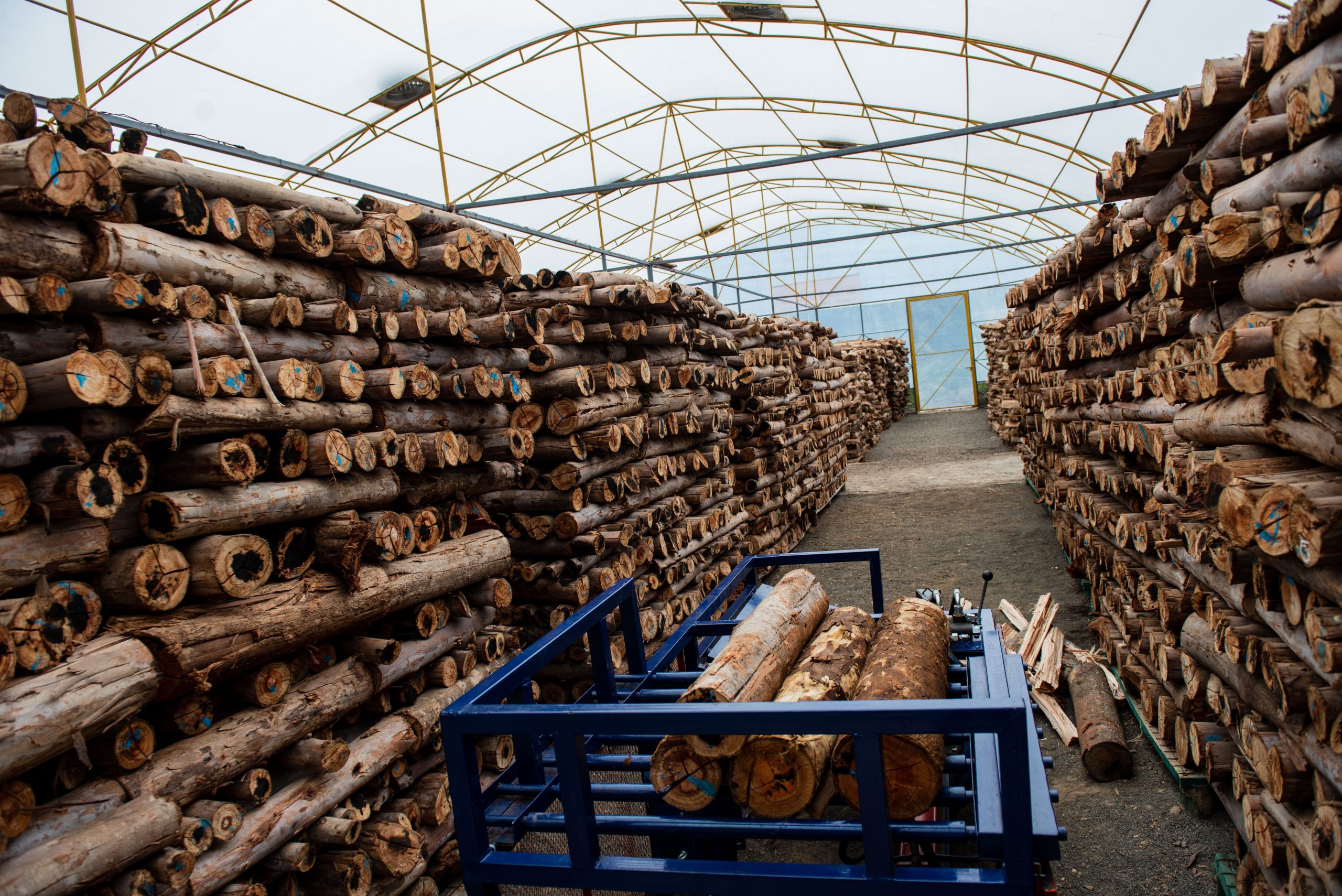
In Kenya’s vibrant tea industry, the reliance on firewood for energy poses a significant challenge, contributing to deforestation and environmental degradation. For years, tea factories have depended on wood fuel to power their operations, driving demand for firewood and putting immense pressure on forest ecosystems. As the demand for tea continues to grow, so does the need for sustainable energy solutions that mitigate the environmental impact of firewood consumption. Most tea factories in Kenya do not carry out factory wide energy or water metering. This means there is little actionable data to inform the factories’ energy and water management strategies.
Amidst these challenges, the Center for Biomass Energy Studies (CBES) of the Dedan Kimathi University of Technology (DeCES) in collaboration with the WE4F East Africa Regional Innovation Hub launched a project aimed at offering innovative solutions to enhance energy efficiency and reduce deforestation. The two-and-a-half-year partnership, which ended in June 2023, enabled the integration of cost-efficient technology and resulted in the development and implementation of an innovative fuel wood seasoning shed.


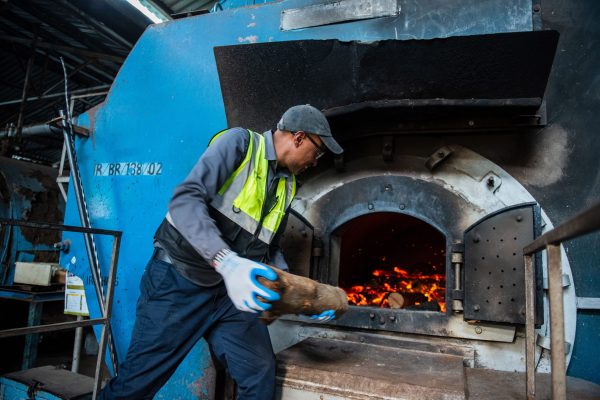
More efficient operations thanks to reductions in firewood consumption and costs
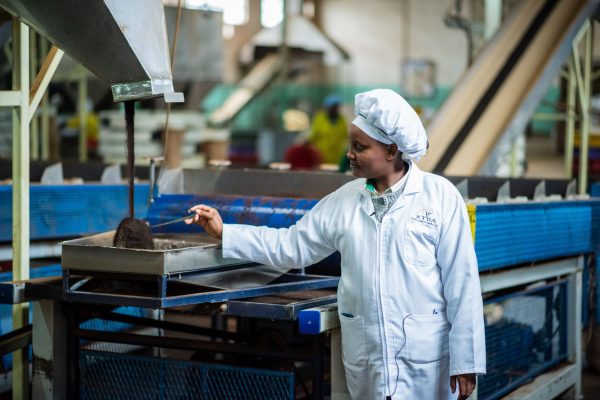
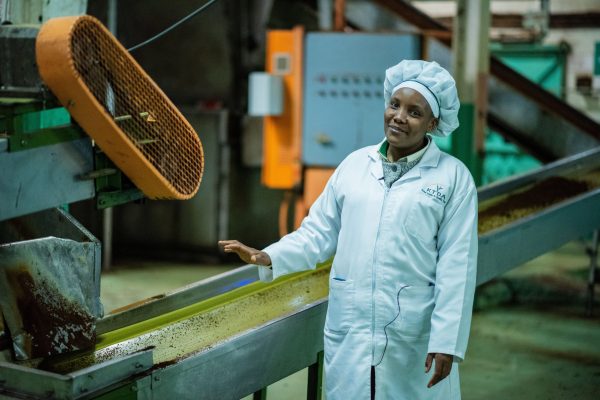
In the wake of the fuel wood seasoning shed implementation, the transformative impact on tea factory operations speaks for itself. Data from the tea factory’s post-implementation performance reveals a striking reduction in wood fuel consumption and associated energy costs. During the 2022/2023 financial year alone, the factory reported a remarkable 2313 m3 reduction in firewood usage compared to the baseline year of 2021/2022. Moreover, the factory’s electricity consumption had a substantial decline, plummeting by 63,291 kilowatt-hours during the same period.
These outcomes underscore the efficacy of low-cost, high-efficiency fuel wood seasoning shed in optimizing wood fuel quality and, consequently, enhancing energy density and flammability. By mitigating moisture content, the shed has not only bolstered the calorific value of wood fuel, but also facilitated significant reductions in fuelwood consumption. This translates to cost savings for the tea factory while underscoring a broader commitment to environmental sustainability and resource efficiency.
Boosting sustainability in the tea industry with wood seasoning sheds
The success of CBES’s innovative solution extends beyond mere statistics.. Notably, the wood fuel shed has already been replicated in two other tea factories. The technology’s versatility has also led to its adoption in other industries (e.g., avocados and coffee processing) with drying needs. Further interest continues to grow across various sectors, highlighting the potential for scaling up and replicating the technology. With each factory and industry that adopts CBES’s fuel wood seasoning shed, the ripple effects resonate, ushering in a future where sustainability and efficiency converge to drive lasting change.
Contact
For more information about supported innovators, please have a look at the East Africa Hub Subpage or contact lucie.pluschke@giz.de (Regional Innovation Hub Manger) or kilian.blumenthal@giz.de (Technical Advisor) annette.juma@giz.de (Technical Advisor).
