

By the end of 2022, Kenya had experienced its fifth consecutive failed rainy season, exacerbating the existing drought – the most severe one in 40 years. The prolonged dry spell severely impacted 98% of Kenyan farmers who depend on rain-fed agriculture for their food and income. Among these farmers, women in the West Pokot region rely on rain-fed agriculture to provide for their families as they typically lack a formal income. Their reliance on rainy seasons makes their crops highly susceptible to the effects of climate change. To increase their resilience, Lydia Kendi and fifteen other women in Kabichbich, West Pokot, came together in 2011 to form the Ewan Kiror women’s group. Under the leadership of Lydia Kendi, the women’s group acquired a greenhouse to optimize their use of the limited available water. This is where WE4f supported innovator Synnefa comes in with their innovative water technologies.
Decreasing working hours and Increasing incomes for women
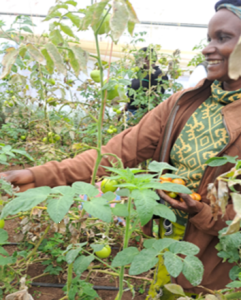
Lydia Kendi in the women’s group greenhouse
In their greenhouse, Lydia and her group manually irrigated tomatoes and bell peppers that they planted for commercial purposes. Although the plants required less water in the greenhouse than they would outdoors, group members had to work in daily shifts of two to three members to water the plants. This prevented them from engaging in activities on their personal farms and in the market. Additionally, they were unable to accurately measure the amount of water the plants required, leading to over-irrigation as well as pest and disease stress. Despite these challenges, Lydia and her team harvested and sold produce every cropping cycle. This provided additional income to supplement the group members’ food sources.
In 2022, the group managed to generate KES 200,000 (about $1,3690 USD) in revenue from a single tomato crop cycle and enabled the group to later diversify its portfolio to chili farming. From the income earned, the group invested in three tents and 157 chairs, which they rent out for functions in the village. The income also empowered the women to establish individual farming activities on their farms. Lydia and her group members are among the 2,000 farmers in Kenya benefiting from the use of Synnefa’s water and labor-saving innovative technologies, highlighting the incredible potential that lies within the innovation.

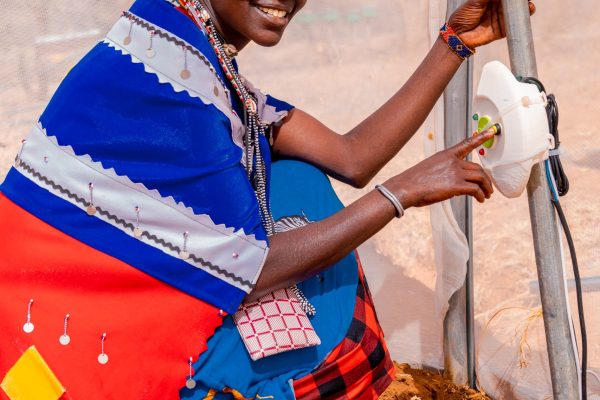
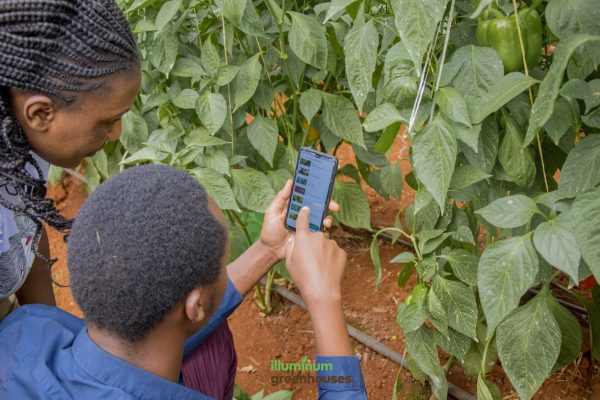
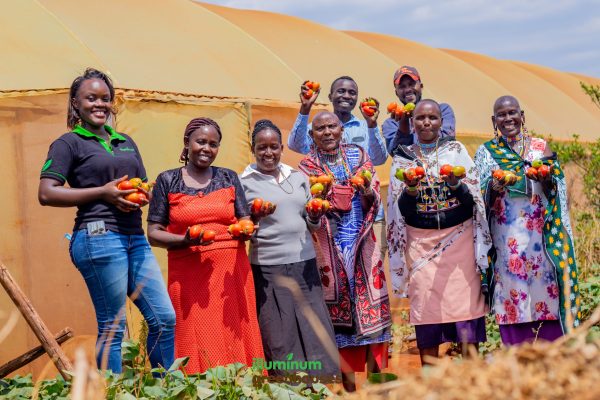
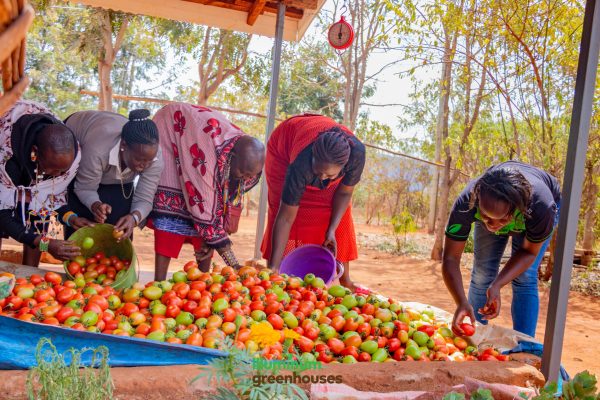
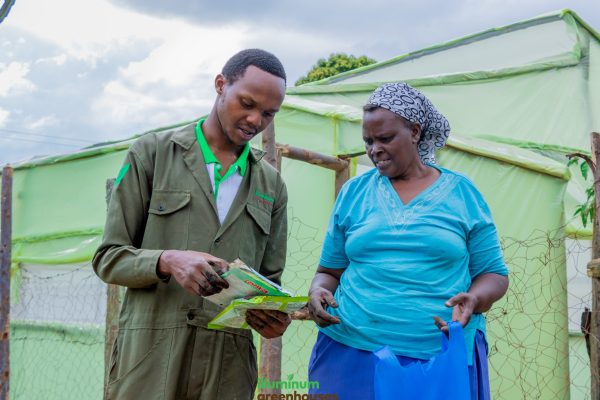
Synnefa supporting a women’s groupe with using water technologies in their greenhouse.
Contact
For more information about supported innovators, please have a look at the East Africa Hub Subpage or contact lucie.pluschke@giz.de (Regional Innovation Hub Manger) or kilian.blumenthal@giz.de (Technical Advisor).
