
Across Malawi’s central and southern regions, inconsistent dry and rainy seasons have persisted over the last five year. Malawians experienced extreme precipitation in a short period through cyclones followed by prolonged drought. Most notably, the 2019 drought which reduced agricultural production by 50% and left more than six million people food insecure:
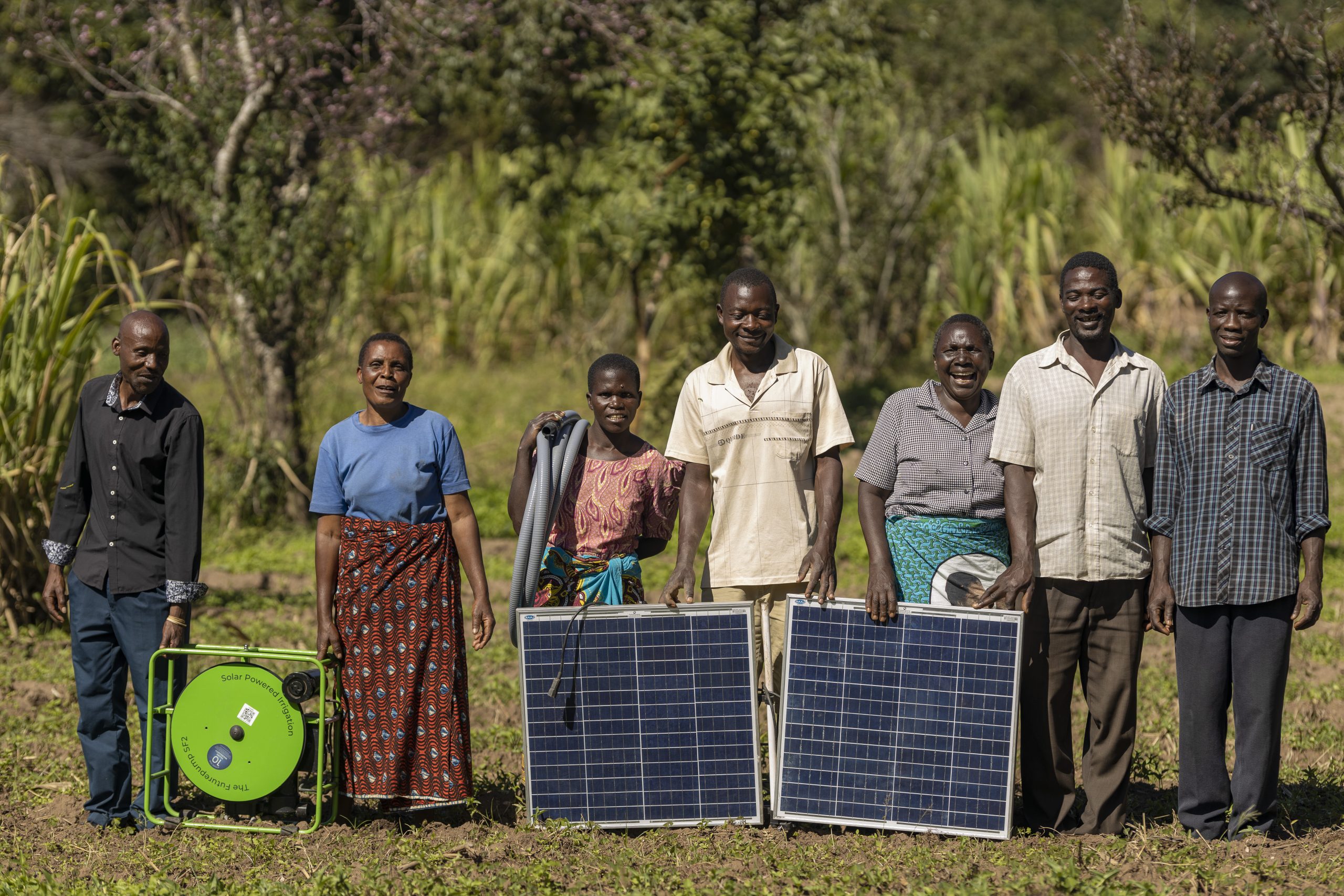
Eliza Boa is a resident of Kanyimbo village in Ntcheu district – one of the districts in Malawi’s central region. She and other villagers formed the Kanyimbo cluster to support each other through increasingly unpredictable agricultural farming. Comprising of 16 women and 12 men, the cluster managed to lease out two acres of land from which they communally farmed soy bean. In the dry season, the cluster farmed vegetables for household consumption on less than a half-acre since they used manual irrigation methods – mainly jerry cans – to irrigate the land.
Green Impact Technologies Introduces Farmers to Solar powered Irrigation
Eliza and a few of her group members learned about solar water pumps through a field extension meeting that was held in her village to train farmers on good agronomic practices and the benefits of irrigation. The training was conducted by Green Impact Technology (GIT) officers. GIT is one of the companies supported by WE4F which seeks to promote the adoption and use of innovative and sustainable agricultural solutions. Through joint contributions, Eliza and her group members purchased a solar water pump by paying an initial deposit and then through further scheduled payments – also payable in installments – once they received and utilized the pump.
During the 2022 dry season, the group managed to earn 350,000 Kwacha (about $207 USD) from farming cabbages, tomatoes, and onions. After paying the remaining installments for the solar water pump, the group distributed some of the proceeds to support household expenses during the dry season as well as to prepare for the rainy season.
The Kanyimbo Cluster’s Achievements and Their Way Forward
The increased income encouraged the Kanyimbo cluster to lease an additional 2 acres of land along the Nkhozo River in preparation for the upcoming dry season. The group plans to double the area under irrigation. Eliza, in particular, adopted some of the agronomic practices learned during the implementation of the group irrigation farming and now applies them on her farm. Furthermore, she now uses certified seeds for water retention as well as pest and disease management and is intercropping with other barrier crops she learned about when farming under the GIT initiative.


The introduction of solar water pump irrigation farming to the Kanyimbo cluster not only supported the growth of incomes from the group members and reduced the amount of required farming labor, but also improved the farming skills of those who apply it on their farms.
Together with WE4F, the innovative enterprise, Green Impact Technologies, supported many other more farmers by introducing them to solar powered and contributing to more sustainable food systems in the East Africa region.
