Bioslurry: extending the reach of biogas innovation
Innovation Type:
Energy-Food
Product Segment:
Energy – Farm Input
Country of Incorporation:
Indonesia
Country of Implementation:
Indonesia
Company Stage:
Stage 3: 0 to 100 end-users
Contact Name:
Rebekka Angelyn
Contact Email:
Website:
Challenges
In Indonesia, there are three pressing concerns: energy, food security, and climate mitigation. According to the Minister of Agriculture, for the past five years the productivity of rice has declined by 1.08%. Furthermore, according to a study done by the R&D Agency of the Agriculture Office, 65% of Indonesia’s 5 million hectares of rice fields contain only 2% of organic matter.
Productivity in the agricultural sector and soil degradation has been caused by extensive chemical fertilizer application by farmers in Indonesia and lack of access to affordable fertilizer causes productivity to decline in the agricultural sector. Additionally, about 5.3 million farmers do not have access to subsidized fertilizers.
In terms of waste, livestock waste in Indonesia, if left untreated, can emit up to 21 million tCO2e of GHG by 2030. There is an opportunity to capture the methane from the livestock waste and convert it into gas for cooking and as a natural soil fertilizer.
Solutions
Yayasan Rumah Energi (YRE) facilitates small and mid-size enterprises (SMEs) and microfinance organizations (MFIs) to install biodigesters for small livestock farmers. The business model enables the development of an ecosystem for a local biogas market from financial arrangements, construction, and operations through to after-sales service support.
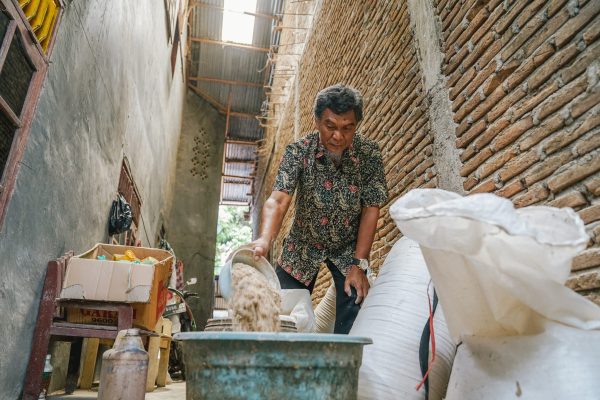
Based on the success of biogas, YRE will expand its business through a registered for-profit entity to commercialize bio-slurry (the residue produced by biogas) as organic fertilizers. YRE will procure the bio slurry from existing biogas users and supply them to farmer producer companies, individual farmers, and plantations. This expansion will enable a greater number of livestock farmers to make additional income from selling bio-slurry on the sourcing side and improving yields and filling the fertilizer access gap amongst farmers on the supply side.