Implementing localized and organic fertilizer production in rural villages
Innovation Type:
Energy-Food
Product Segment:
Energy – Farm Input
Country of Incorporation:
Kenya
Country of Implementation:
Kenya
Company Stage:
Stage 4: 10,001 to 999,999 end-users
Seeking Investment:
Yes, $3 million USD
Financing Goals:
Seeking combination of debt and equity
Seeking hybrid (convertible debt or similar)
Contact Name:
Samuel Rigu
Contact Email:
Website:
Challenges
Many smallholder farmers have limited income, and can only afford the cheapest, synthetic fertilizer varieties (e.g. urea) that in the long run can acidify and degrade their soil. According to an India-wide study by Kumar et al. (2014), for example, the soil acidity problem already affects at least 30% of all of India’s cultivated lands. Worldwide, this specific problem affects 237 million smallholder farmers, who spend US$30 billion/year on ineffective fertilizers. International supply chain disruptions have caused price spikes and unavailability of fertilizers in rural communities leading to acute food security crisis for many farming communities. Many farmers have expressed the need for locally produced and available fertilizers that are not dependent on the international supply chain.
Solutions
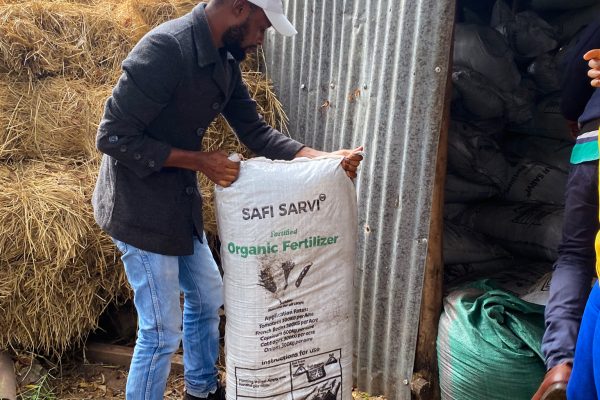
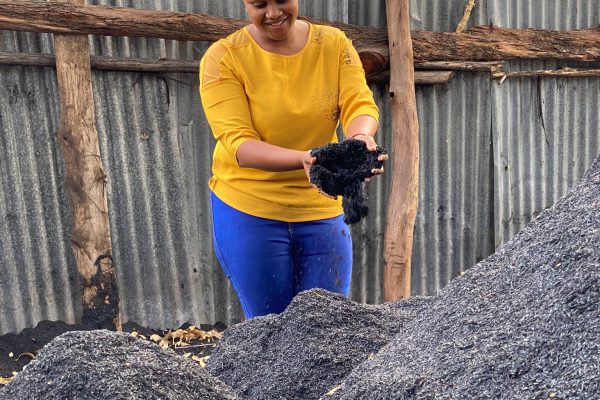
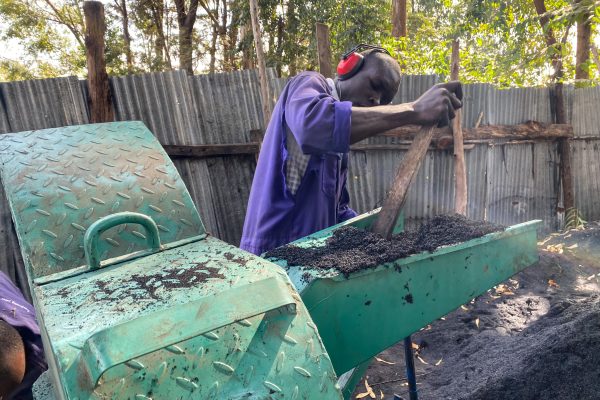
Safi Organics uses a combination of hardware technology and an online real-time control and sensing system to decentralize and downsize the fertilizer production process, making it feasible to implement localized fertilizer production in rural villages using only locally available resources, labour, and waste. Safi Sarvi, is a locally produced carbon-negative fertilizer that helps farmers improve yields by 30%. Since the fertilizer production process can be implemented at the village level, reaction condition can be altered, and the fertilizer characteristics tailored to the local soil type in a way that traditional fertilizer production cannot achieve. The solution eliminates most of the enormous energy and fuel costs otherwise required to produce synthetic, chemical fertilizers in large-scale, centralized plants and import these fertilizers to rural areas. The organic fertilizer also helps the local soil retain moisture and nutrients more effectively, such that farmers can reduce the amount of both chemical inputs and irrigation needed for their crops to succeed by more than 15%.