
Sarah Dekhel, the MENA Regional Innovation Hub’s (RIH) Environmental Specialist, contributed to three panel sessions during the COP28 in Dubai, United Arab Emirates. The discussions covered the significance of agricultural innovations in addressing the impact of climate change on vulnerable communities, how to invest in innovative capacity building solutions to green the economy, and the importance of collaborative ecosystems when fostering green entrepreneurship. Sarah also highlighted successful stories of piloting innovations in drylands and explored farming techniques. Overall, she focused on promoting sustainable economic activities, environmentally positive innovations, and smallholder farmers’ climate resilience through innovative solutions and collaborations. Below are her observations and how these fit within the priorities of the MENA RIH.
You can view the blogs about the participation of other hub staff here and innovators’ participation here.
The Opportunity of Agrotourism: Reimagining Egypt in 2050
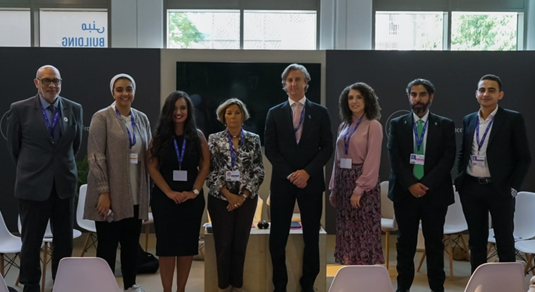
The panel discussion brought together key stakeholders and changemakers to discuss the importance of investing in agrotourism, to address the complex and interrelated challenges of the effects of climate change on vulnerable communities. The conversation explored behavioral triggers and barriers from different system levels’ points of view, identifying emerging signals of change, potential future challenges, and opportunities.
I spoke about WE4F as a successful case study that can be replicated to support SMEs in other value chains and gave an overview of agricultural companies that are supported by the hub, showcasing their agricultural advancements on a large scale.

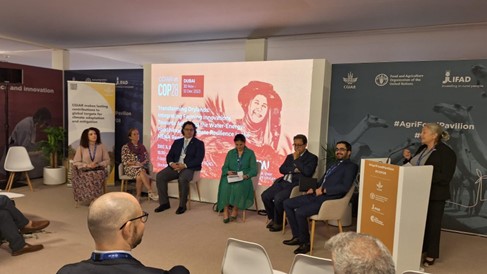
Transforming Drylands: Integrating Farming Innovations towards achieving WEF Nexus for Climate Resilience in the MENA region
The discussion covered key elements for climate-resilient agri-food systems, policy alignment, and stakeholder collaboration. It also showed how the water-energy-food-climate nexus approach holds several promises for boosting dryland economies by building on a close connection between science and policy. Additionally, some successful stories of piloting innovations in drylands were presented to introduce scientists and policymakers to the nexus approach. The session also tackled methodologies of supporting profitable business models based on innovative solutions to endorse the resilience of small-holder farmers. Finally, the side event highlighted the social aspect of the initiative, including means for developing agri-business models through small and medium enterprises (SMEs) to improve the livelihood of smallholder farmers and promote a participatory approach.
During the session, I spoke about proven and environmentally positive agricultural innovations implemented by MENA innovator, Green Eagle Tech. These irrigation innovations are resilient to climate change and have the potential to be scaled and adapted to a global context. Furthermore, I emphasized the role of the MENA RIH in accelerating agri-businesses and SMEs along the value chain to enhance food security, showcased success stories in supporting WEF nexus innovations for sustainable dryland farming, and presented a short video on Green Eagle Tech as an example for successful agri-tech innovation.
Reimagining the Future of Green Sectors
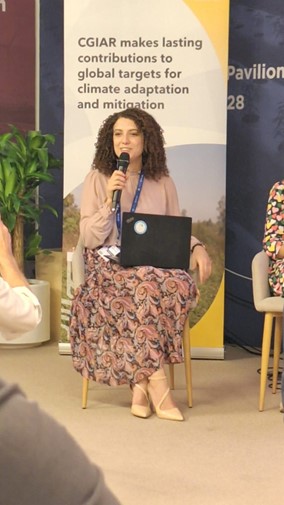
The first part of the panel discussion brought key stakeholders and changemakers together to discuss the importance of investing in innovative education solutions at different academic levels, which can help address the complex and interrelated challenges of greening the economy and climate change. Discussions covered behavioral triggers and barriers from different system levels’ points of view, identifying emerging signals of change that are expected to affect the future of women in green sectors, potential future challenges and opportunities, and the needed system changes accordingly.
Subsequently, the conversation explored the importance of collaborative ecosystems in fostering green entrepreneurship among women. Panelists discussed the role of national partners, including governmental agencies, non-profit organizations, and private enterprises, in providing support, funding, and resources to women-led green startups. The session also emphasized the significance of public-private partnerships in creating a supportive environment for female entrepreneurs to grow and scale their ventures.
As a panelist, I was given the opportunity to discuss the role of WE4F in supporting women-led and women-owned SMEs by providing grants and technical assistance.
