
Boniface Paskal, a dedicated farmer from Matombo in the scenic Uluguru Mountains of Tanzania’s Morogoro region, represents a community of spice growers. The region’s hot and humid climate is also ideal for growing a wide range of spices, including cloves, cinnamon, black pepper, mint, cardamom, vanilla, ginger, and turmeric. The Uluguru Mountains also serve as a vital water catchment area for the Ruvu River, which supplies water to over 7 million people in Tanzania.
Boniface initially grew crops such as cassava and bananas solely for personal consumption. While these crops provided food for his family, they did not generate the additional income which he needed to meet his family’s needs. Although he had a large tract of land, he felt that it was being under-utilized. So, he decided to diversify into spices, which had a ready market and could provide him with a livelihood.
As Boniface began his spice farming journey, he faced several challenges that hindered his success as a farmer and respectively limited his income. One of the main problems was the low payments he received from brokers. Despite his hard work and dedication, his earnings were insufficient to support his family’s needs and aspirations. Additionally, the drying of spices and herbs proved to be a daunting task, especially during the rainy season. The humid conditions made it difficult to properly dry the harvested spices, which affected their quality and marketability and led to post-harvest losses. That’s where Kazi Yetu stepped in to provide a solution to help improve Boniface’s agricultural practices and income.
Income increases and environmental awareness in Tanzania solutions
The innovative enterprise, Kazi Yetu, works with various suppliers to source unique teas, herbs, and spices for their eight tea blends. These suppliers range from individual smallholders like Boniface, to farmer groups, cooperatives, agro-processors, and independent suppliers and aggregators all of whom practice organic farming.
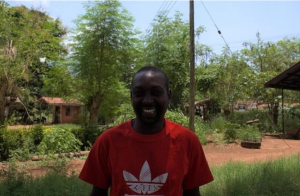
Boniface Paskal at the Kazi Yetu SAT farm hub in Morogoro, Tanzania.
With WE4F’s support, Kazi Yetu, in partnership with Sustainable Agriculture Tanzania (SAT), set up a farm hub model in Morogoro to train farmers on organic and regenerative agriculture. The hub provides farmers with crop aggregation services, demo plots, and farm input delivery services; and offers capacity building in various areas including good agricultural practices and organic certification. This enabled Kazi Yetu to establish a traceable supply chain, which involves registering smallholder farmers and establishing purchasing agreements between the hub and farmers, resulting in greater reliability and quality of product for both parties. Kazi Yetu provides the farm hub with forecasts of when specific herbs and spices will be required at their processing factory, which allows farmers to plan their harvest periods accordingly. The innovator also established a solar drying center in Mtamba to address post-harvest losses during rainy seasons, particularly for delicate spices such as mint
Through the Kazi Yetu SAT farm hub, Boniface received comprehensive training and education on organic farming practices and regenerative agriculture. The partnership promotes agroforestry and organic techniques, which helps improve the environmental sustainability of Boniface’s farming systems. Through a purchasing agreement with the farm hub, Boniface saw a significant increase in income compared to when he sold his produce to brokers, elevating him from a low-income to a middle-income household.
Boniface and other farmers involved in the Kazi Yetu farm hub model now reap the benefits of value addition – their produce is sorted, blended, and packaged for different target markets. The partnership with Kazi Yetu provides farmers with a reliable market for their produce, allowing them to expand their farming operations through additional land acquisition and crop diversification. Inspired by Boniface’s positive experience, his neighbors joined the farm hub model and became certified organic farmers. Boniface’s community also benefited from positive spillovers: families are now wealthier and enjoy improved livelihoods, enabling children to access better schools, education, and healthcare services.



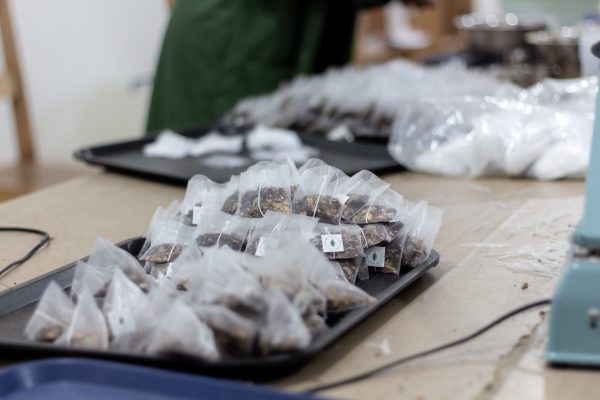


Kazi Yetu and WE4F – leading the way for transforming agri-food systems
WE4F’s support for Kazi Yetu’s intervention has positively impacted smallholder farmers across the whole region. Like Boniface, many farmers have experienced transformative change through farmer trainings, increased use of agroforestry and organic farming practices, improved earnings, value addition, market access, expanded agricultural activities, farmer partnerships, and enhanced accountability.
The program’s achievements are reflected in the progress made by smallholder farmers engaged in the WE4F-supported innovations. The partnership between Kazi Yetu and WE4F empowered individual farmers and contributed to the socioeconomic development of the entire community and country, resulting in a more sustainable and prosperous future for its people.
Discover more about Kazi Yetu’s story in this video:
Contact
For more information about supported innovators, please have a look at the East Africa Hub Subpage or contact lucie.pluschke@giz.de (Regional Innovation Hub Manger) or kilian.blumenthal@giz.de (Technical Advisor).
