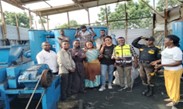
Ecological briquettes made from waste and biochar
Innovation Type:
Energy-Food
Product Segment:
Energy – Farm Production & Mechanization
Country of Incorporation:
Democratic Republic of the Congo
Country of Implementation:
Democratic Republic of the Congo
Company Stage:
Stage 1: 0 to 100 end-users
Seeking Investment:
Yes, $500,000 USD
Financing Goals:
Seeking hybrid (convertible debt or similar)
Contact Name:
Bisimwa Nyunda
Contact Email:
Website:
Challenges
According to Global Forest Watch, the Democratic Republic of the Congo (DRC) lost 19.7 million hectares of tree cover in the last 20 years. This loss causes fatal floods and anaerobic decomposition which causes an increase in greenhouse gas emissions. According to the Initiative of Central Africa, an estimated 93% of the population uses charcoal and firewood. Alternative sources have not been an option because the DRC has a low rate of access to clean energy. Additional negative impacts on the environment arise from the usage of chemical fertilizers by smallholder farmers, resulting in devastating effects on the soil and water.
Solutions
Bing manufactures briquettes and organic fertilizer from crop residue. Their team consists of women and young people who collect the waste from a waste bank and then bring it to the plant to be processed. The briquettes burn longer and cost 40% less, when compared to regular charcoal. The produced biochar contributes to the formation of organic carbon in the soil and can reduce nitrous oxide emissions from the soil, allowing nutrients to be fixed and rejuvenating the soil. The briquettes are used by chicken breeders to heat their farms and the innovator has signed Memorandums of Understanding with the chicken breeders association in the region. Compared to non-organic fertilizers on the market, Bing’s organic fertilizer is cheaper, helping farmers save money and also improving their crops quality.
The innovator’s briquettes is combustion that is more resistant than charcoal. It also helps women save time as they no longer have to fetch firewood in the forest; and the briquettes preserve their health because the product does not give off smoke.